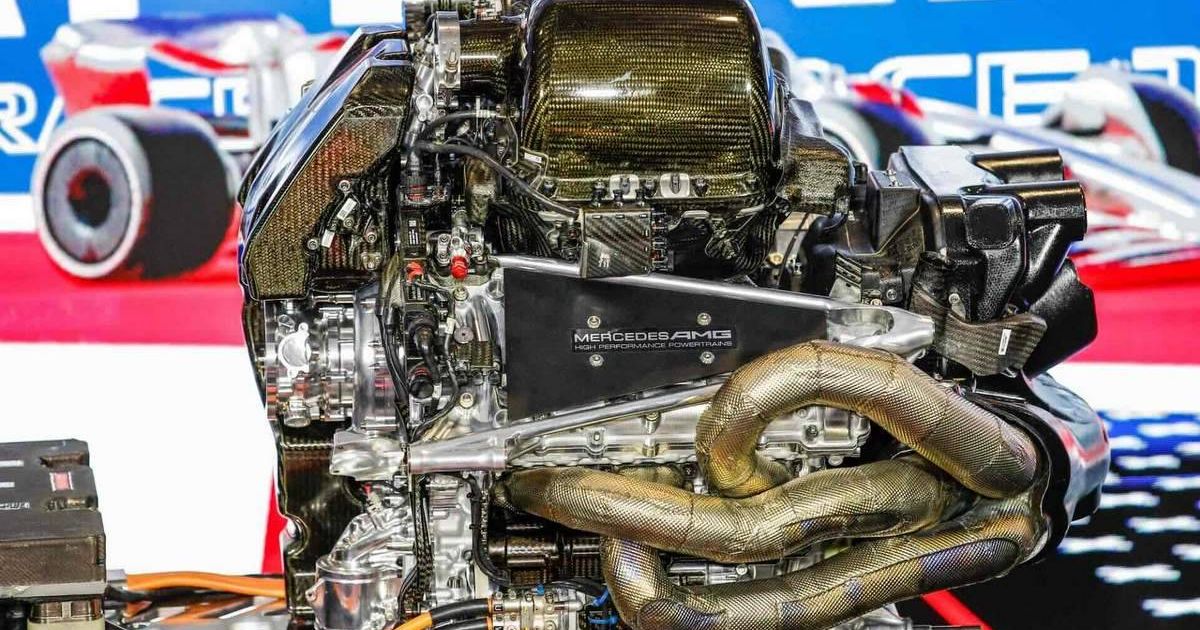
Mercedes has long been at the forefront of Formula 1 technology, continually innovating to improve engine performance. One of their recent advancements involves a sophisticated compression trick that significantly enhances power output and efficiency.
This technique revolves around manipulating the engine's compression ratio, which is the measure of how much the air-fuel mixture is compressed before ignition. By optimizing this ratio, Mercedes engineers can extract more energy from each combustion cycle without compromising engine reliability.
Traditionally, increasing compression ratios can lead to higher power but also risks knocking and engine damage. To counter this, Mercedes developed a method to dynamically adjust compression levels during different phases of operation. This allows the engine to operate at higher compression ratios under optimal conditions, maximizing power, while reducing compression during stress points to prevent knocking.
The core of this trick involves advanced variable compression technology integrated into the engine design. This system uses sophisticated actuators and sensors to monitor engine conditions in real-time, adjusting the pistons' position to alter the compression ratio as needed.
By implementing this dynamic compression adjustment, Mercedes can achieve several benefits. Firstly, it improves the engine's thermal efficiency, leading to better fuel economy and more consistent power delivery. Secondly, it allows for higher peak power outputs, which are crucial during qualifying laps and race situations where every bit of performance counts.
Moreover, this compression trick helps in managing engine temperatures more effectively, reducing the risk of overheating and extending engine lifespan. It also provides the team with greater flexibility in tuning the engine for different circuits and race conditions.
In practical terms, this innovation translates into Mercedes-powered cars having a competitive edge on the track. They can produce more horsepower while maintaining reliability, which is vital in the high-stakes environment of Formula 1 racing.
Overall, Mercedes' clever use of variable compression technology exemplifies how engineering ingenuity can push the boundaries of current automotive technology. As Formula 1 continues to evolve, such innovations are likely to become standard features across the sport, further intensifying the competition among top teams.
In conclusion, Mercedes' compression trick is a prime example of how strategic engineering adjustments can lead to significant performance gains. It highlights the ongoing race for technological supremacy in Formula 1, where every detail counts in the quest for victory.